Building TrustworthyDigital Twins for Patient-Centred Medicine
The Digital Twin – A Virtual Patient for Better-Informed Medical Decision-Making
With the growing impact of artificial intelligence in healthcare, the development of treatment approaches based on digital twins has gained increasing importance in recent years. In general, the concept of a digital twin refers to the virtual, data-driven representation of processes and systems. In the context of human medicine, this means creating a digital counterpart of individual organs, biological systems, or even the entire patient. To continuously refine and update this representation, the digital system must be fed with real-time data. These data may originate from medical imaging procedures such as MRI scans, sensor-generated datasets, laboratory results, or symptom descriptions collected during patient consultations.
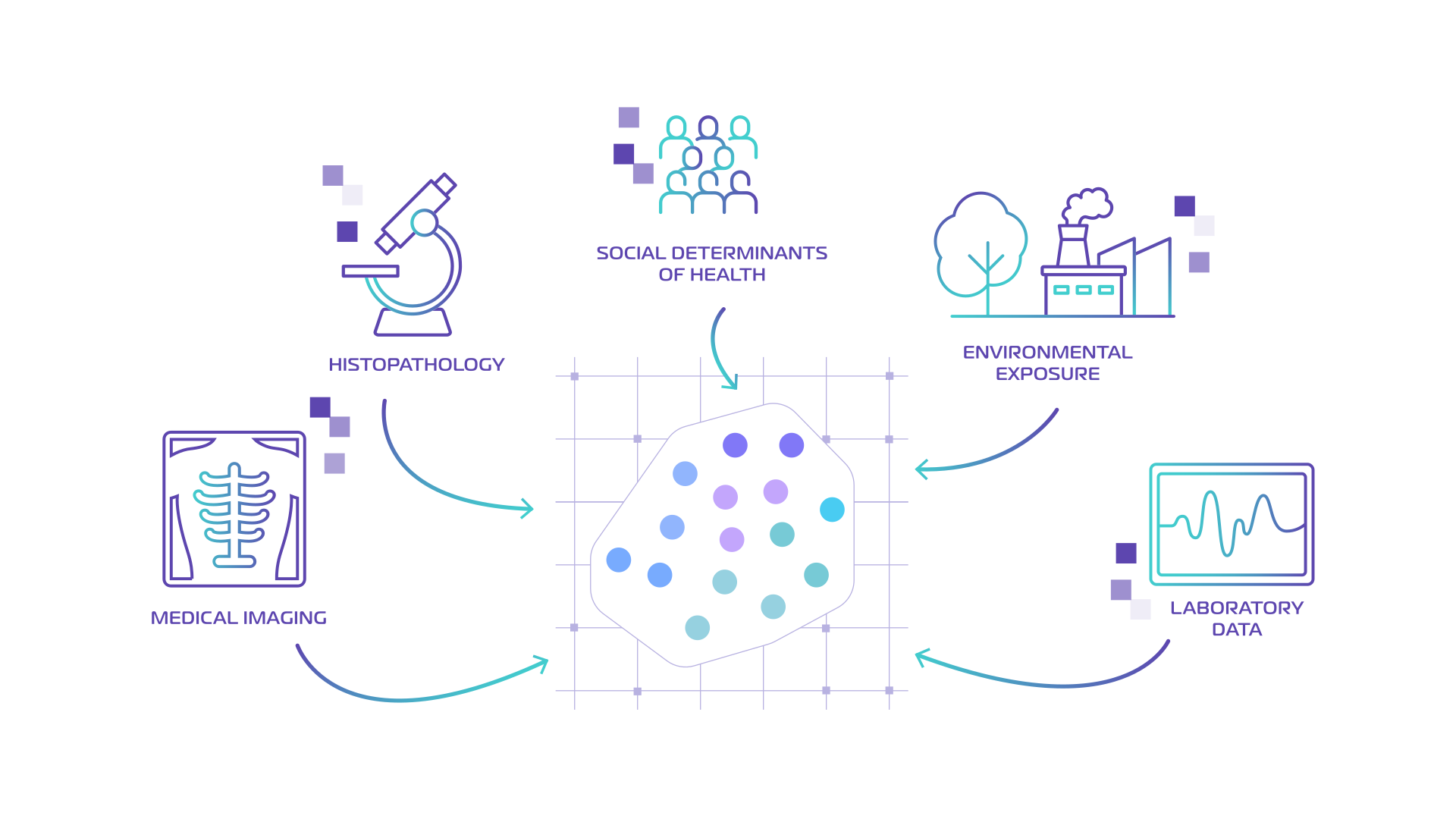
AI systems are capable of integrating these diverse data sources, drawing conclusions, generating predictions, and simulating the effectiveness of different treatment approaches. Individual patient data can be compared with large-scale reference datasets, enabling the calculation of how specific variables, such as pre-existing conditions or individual physiological characteristics, may influence treatment outcomes. In this way, the use of AI-driven systems in medicine makes it possible to understand and characterise diseases through large reference datasets. At the same time, combining these extensive data resources with individual patient information allows for more precise diagnoses and more patient-centred treatment decisions.