Building TrustworthyDigital Twins for Patient-Centred Medicine
EuSoMII Conference 2026: Redefining the Relationship Between AI and Clinicians
As AI systems in healthcare advance and gain new capabilities, a key question for the years ahead is whether existing infrastructure, validation methods and oversight mechanisms can keep pace. Both the challenges and opportunities that AI brings to everyday clinical practice were central themes at this year’s EuSoMII annual meeting, held in Heraklion, Greece, on 9 and 10 October. The TWIN-X project was prominently featured, with nine contributions from its partners. Topics included the role of agentic AI in clinical workflows, the management of errors and safety risks, the infrastructure required for AI and the environmental costs of its use.
Shared Responsibility for Trustworthy AI Models
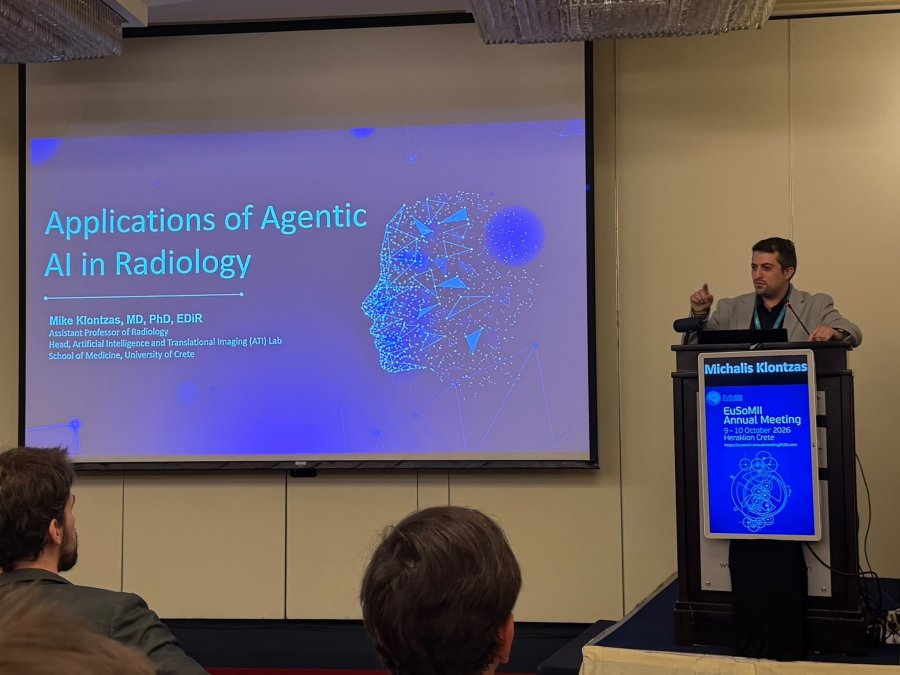
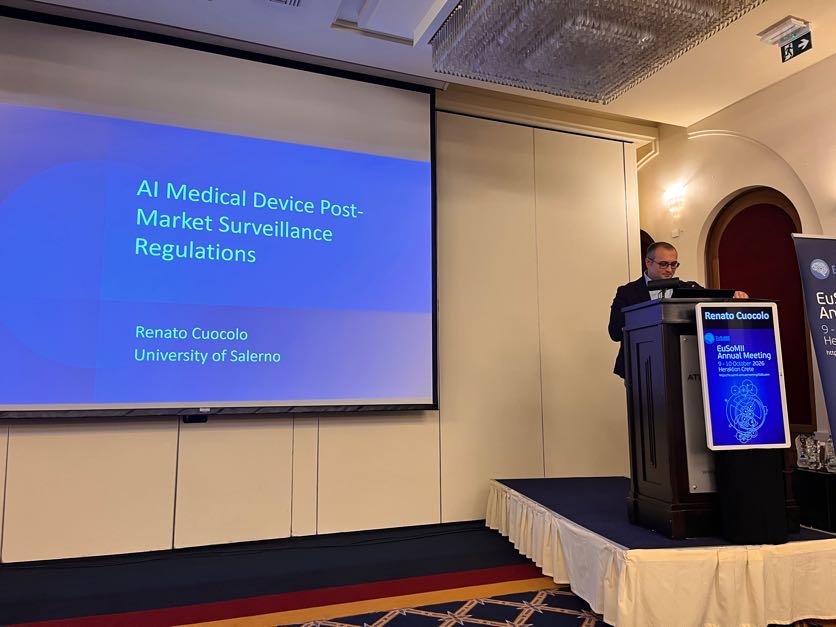
After a warm welcome from EuSoMII President Daniel Pinto dos Santos and local host Michail Klontzas (University of Crete), both members of TWIN-X, the conference opened with an educational panel on post-market surveillance. TWIN-X consortium member Renato Cuocolo (University of Salerno) discussed how AI models should be monitored once they enter clinical use. His presentation underscored the need to manage AI throughout its lifecycle, particularly as medical software continues to evolve. That responsibility, he argued, is shared: developers, clinical users, operators and policymakers all have a role to play in protecting data and ensuring that appropriate access controls are in place from the outset.
Agentic AI: How to Ensure AI Systems Act Responsibly
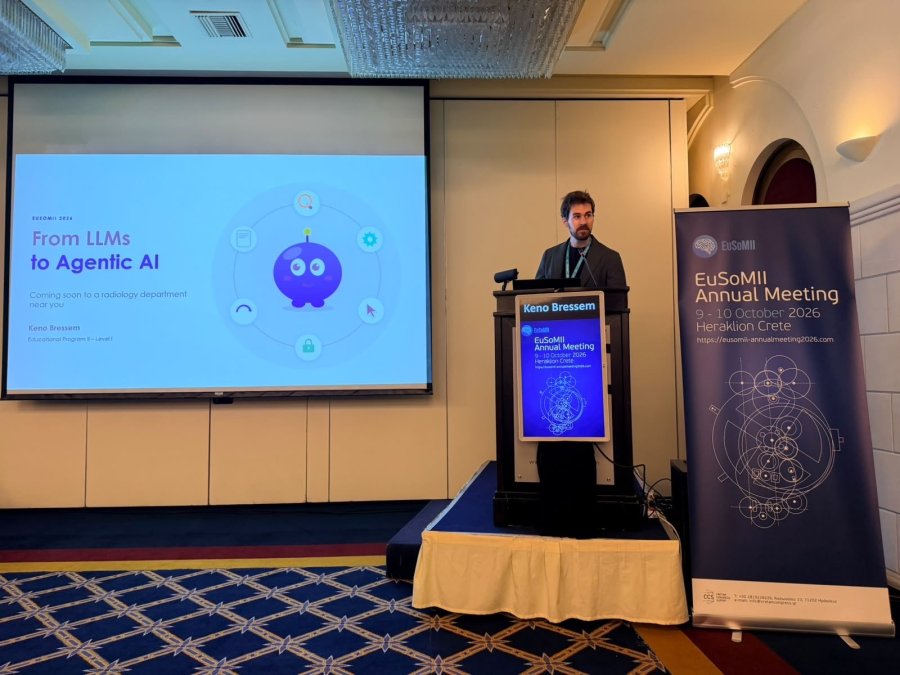
The second educational panel focused on the potential and challenges of agentic AI. In their talks, TWIN-X coordinator Keno Bressem (TUM Klinikum rechts der Isar) and Michail Klontzas (University of Crete) described systems that can select tools, carry out tasks and use intermediate results to decide what to do next. This marks a shift from AI that simply responds to prompts to agentic systems capable of taking action. The presentations also highlighted the complexity of validating agentic AI systems. Assessment must consider the system as a whole, including how its components interact and how errors and uncertainty can propagate from one step to the next. Malicious instructions embedded in retrieved content could also influence an agent’s behaviour. Safeguards such as restricted tool access, limits on external connections and sandboxing – running software in an isolated environment to limit security risks – are therefore essential for building trustworthy systems.
Strengthening Human Oversight in AI Development
Following Florence Doo’s (University of Maryland) keynote, “Sustainable Intelligence: Can Radiology AI Be Green, Global, and Generational?”, the panel moderated by Merel Huisman (Radboudumc) broadened the discussion of sustainability to include AI’s long-term implications for human agency and societal resilience. Participants considered whether increasingly autonomous systems could pose risks beyond individual clinical failures, particularly if their objectives diverge from human interests or meaningful human control is lost. Views differed on the scale and likelihood of these risks, but the discussion raised an important question: What role should healthcare professionals play in shaping AI development, oversight and policy?
Deploying AI in Clinical Practice
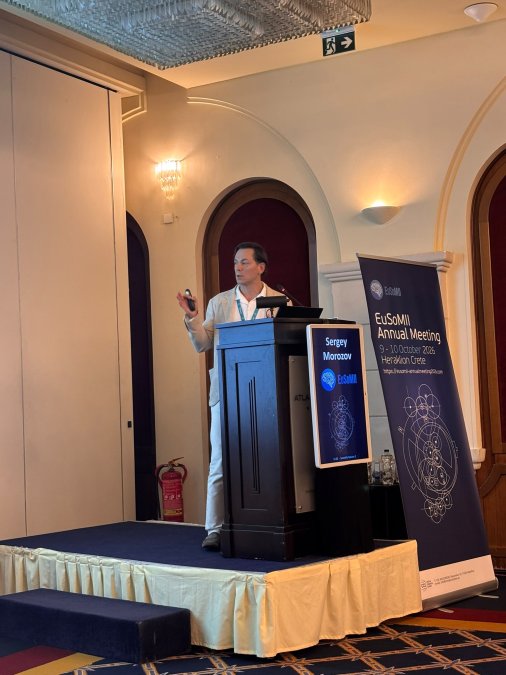
Sergey Morozov and Benoît Rizk (3R) highlighted two practical challenges for clinical AI: delivering results on time and ensuring that they are useful in different clinical settings. Sergey Morozov presented a study on the timing of AI results in clinical workflows, in which he and his team at 3R analysed nearly 97,000 examinations. Most AI results reached radiologists before they finalised their reports, but 7.2% arrived too late. The main cause was not the algorithm itself: around 72% of the total delay was attributable to data routing. Morozov suggested using push-based routing, setting targets for how quickly results should be displayed for different types of examination and monitoring delays quarterly.
In his presentation, Benoît Rizk highlighted that AI tools for detecting fractures analyse X-ray images without knowing why the examination was requested. His team examined uncertain AI results from 20 clinical sites in 2025 and found that radiologists’ reports confirmed or clarified these results in 48% of cases when the referral specifically raised the question of a fracture, compared with just 17% when it did not. Rather than switching the AI off outside trauma settings, Rizk proposed providing it with the reason for the examination so it can adapt how its results are presented.
For TWIN-X, the discussions at EuSoMII 2026 highlighted important considerations for the further development of its digital twin platform. Integrating different types of patient data into interactive, multimodal representations requires not only reliable technical infrastructure but also careful management of uncertainty, transparent data sources and effective human oversight. The conference reinforced the importance of addressing these challenges to ensure that AI-based tools can be used safely and effectively in clinical practice.
Picture credits: EuSoMII Social Media Team